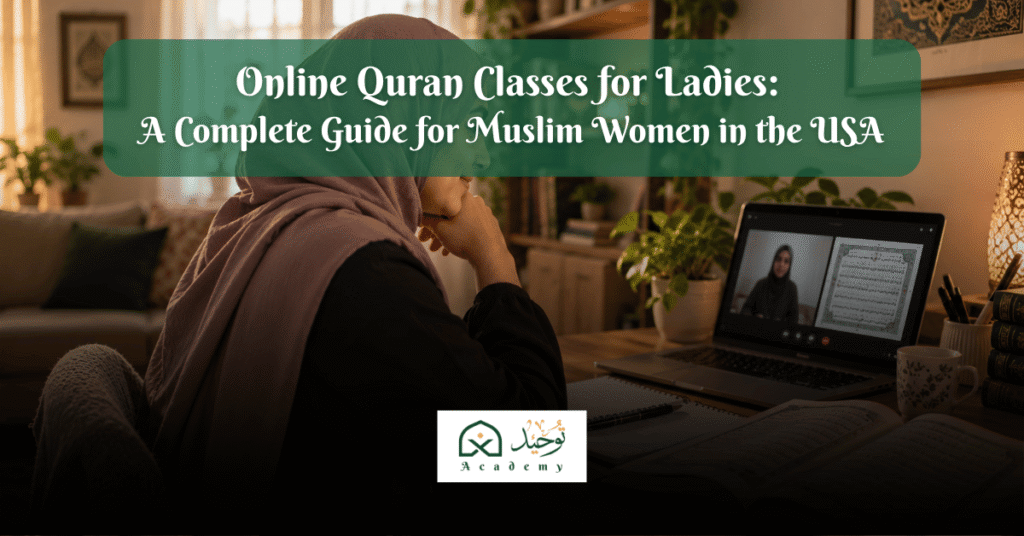
Starting to learn the Quran as an adult, or signing your child up for their first class, can feel like a big step. This is even more true if nobody in the house has read Arabic before. The good news is that beginners today have more support than ever. Online Quran classes for beginners are built around small steps, patient teaching, and one on one attention, so nobody gets left behind on day one.
If you are searching for the best online Quran classes for beginners, this guide covers what actually matters. You will learn how beginner classes work, what a real starting curriculum looks like, what to check before you pay for anything, and how to avoid common mistakes. At Tawhid Academy, we teach online Quran classes USA wide, so this guide comes from real classroom experience with real beginner students, not guesswork.
Choosing the best online Quran classes for beginners comes down to a clear starting curriculum, real one on one correction, and a teacher trained to work with new readers. Beginners who avoid rushing past the basics and practice a little each day tend to build lasting reading skills instead of habits they need to unlearn later. Academies like Tawhid Academy that offer a genuine free trial and a clear path from letters to fluent reading make that first step far less overwhelming.
What Makes Online Quran Classes Good for Beginners
Not every Quran class is built for someone starting from zero. A class that works well for a beginner usually has a few things in common.
- One on one lessons instead of large group classes, so mistakes get caught right away
- A clear starting point, such as a Noorani Qaida course, instead of jumping straight into Quran text
- Teachers who are trained to work with true beginners and not just students who already read Arabic
- Flexible scheduling that fits different time zones and daily routines
- The option to choose a male or female teacher, which matters a lot for many families
When these pieces are missing, beginners tend to fall behind quietly. They nod along in class, then struggle alone at home because nobody caught a pronunciation mistake early.
How Beginners Learn to Read Quran Online, Step by Step
A good beginner path does not start with the Quran itself. It starts with the building blocks that make Quran reading possible later on.
- Arabic letters. Students learn to recognize all 28 letters, their shapes, and how they sound on their own.
- Pronunciation points. Each letter comes from a specific place in the mouth or throat. A teacher listens closely so the sound is correct, not just close.
- Short vowels (Harakat). Fathah, Kasrah, and Dammah change how a letter sounds, and beginners practice these until they become automatic.
- Joined letters. Arabic letters change shape depending on where they sit in a word, so students move from single letters to full words step by step.
- Tanween, Sukoon, and Shaddah. These extra marks add more detail to pronunciation and prepare the student for real Quranic text.
- Reading the Quran. Once the basics are solid, students begin reading actual verses, starting with shorter and simpler ones.
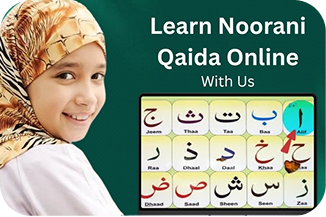
This full path is often called Noorani Qaida. If you want a deeper look at how it works, our guide on what Noorani Qaida is and how it works breaks down each stage in detail. Most academies, including our own Noorani Qaida course, build the entire beginner program around this same structure because it has worked for generations of new readers.
What to Look for When Choosing Quran Classes for Beginners
Many websites simply say to look for a patient teacher. That advice is true but not very useful on its own. Here is what to actually check before you commit.
- Is the first class really a free trial, or is it a sales call in disguise? A genuine trial should be a real lesson where the teacher tests your level and shows you how they teach.
- How does the teacher check pronunciation? Ask if they correct you letter by letter or just let you finish reading and move on.
- Are lessons one on one? Group classes can work for older students, but true beginners usually need individual correction.
- What happens after the basics are done? A good academy has a clear next step, such as moving into a Tajweed course, rather than leaving you unsure what comes next.
- Can you request a specific teacher gender? Many parents and sisters prefer this option, and a serious academy should offer it without difficulty.
- What is the missed class policy? Life happens, and you want to know upfront how rescheduling works.
Asking these questions before you pay saves you from switching academies a few months in, which is one of the biggest reasons beginners lose momentum.
How Long Does It Take a Beginner to Learn Quran Online
There is no single answer here, since it depends on your age, how often you attend class, and how much you practice outside of lessons. That said, a few general patterns hold true for most students.
- Learning the Arabic alphabet usually takes a few weeks of steady practice
- Completing the full Noorani Qaida stage often takes several months, faster with more frequent classes
- Reading the Quran with basic fluency commonly takes close to a year for students attending two to three classes a week
Adults sometimes move faster through the early stages because of stronger discipline, while children often pick up correct pronunciation more naturally. Either way, consistency matters more than speed.
Common Mistakes Beginners Make
A few habits slow beginners down again and again, and knowing them ahead of time can save months of frustration.
- Rushing past the letters. Skipping ahead to feel like you are making progress often means going back later to fix bad habits.
- Only practicing during class. A weekly lesson without practice in between fades quickly.
- Comparing your pace to someone else’s. Every student learns differently, and comparing progress usually just adds stress.
- Choosing a group class too early. Group settings are harder for a teacher to give the correction a true beginner needs.
Building a small daily habit early on also makes it easier to keep reading Quran a regular part of life once the basics are done, including short chapters like the benefits of reciting Surah Al-Waqiah, which many students add to their routine once they can read independently.
Tips for Easy Learning Quran Online
- Practice a little every day rather than one long session once a week
- Ask your provider if lessons can be recorded so you can revise later
- Speak up when something is unclear instead of just nodding along
- Expect pronunciation to take repetition, it is normal and not a sign you are behind
- Keep your study space quiet during class
Why Choose Tawhid Academy for Beginner Quran Classes
Tawhid Academy was built around structured, one on one learning for students across the United States. Every beginner starts with a clear path and moves at their own pace, with a teacher who is trained specifically to work with new readers.
Our courses include:
- Noorani Qaida course, the starting point for reading Arabic and preparing for the Quran
- Tajweed course, for correct and beautiful recitation once the basics are in place
- Tafseer course, for understanding the meaning behind the verses
- Quran Memorization course, for students ready to commit the Quran to memory
You can book a free trial class to meet a teacher and see how the lessons work before making any commitment.
Frequently Asked Questions
Do I need to know Arabic before joining beginner Quran classes?
No. Beginner classes start from the Arabic alphabet itself, so no prior knowledge is needed.
Are online Quran classes effective for young children?
Yes, as long as the class is one on one and the teacher is experienced with children. Short, focused sessions work better for kids than long ones.
Can adults really learn to read Quran online as a beginner?
Yes. Many adult students, including converts and those returning to Quran study after years away, learn to read confidently with consistent one on one classes.
What is the difference between Noorani Qaida and Tajweed for beginners?
Noorani Qaida teaches the basics of reading Arabic letters and words. Tajweed builds on that foundation to teach the detailed rules of correct Quranic recitation.
Is a free trial class actually free?
At Tawhid Academy, yes. The trial is a real lesson with a teacher and does not require any payment or commitment.
How many days a week should a beginner take classes?
Two to three classes a week tends to work well for steady progress, though daily short classes can speed things up for students who want faster results.